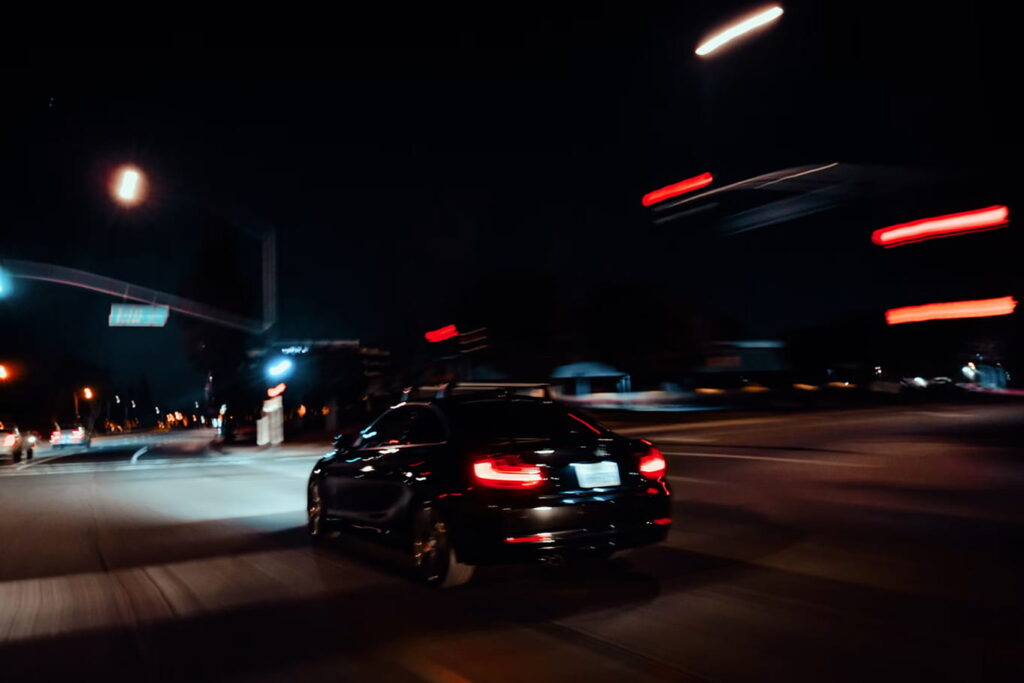


Your first few night drives don’t need to involve unfamiliar roads, heavy traffic and poor weather all at once.
If you’re learning to drive, start with situations you already know and gradually introduce more challenging ones as your skills develop. A familiar road after dark can be a good place to begin. From there, you can experience different traffic levels, lighting and road conditions with an instructor or supervising driver beside you.
The goal isn’t to get through one difficult night drive. It’s to build enough experience that you know how to adjust when driving after dark becomes more demanding.

Start with roads you already know
A road you’ve driven many times during the day can feel surprisingly different after dark.
You may know where the next turn is, but you still have to pick up the signs, road markings, intersections and hazards with less light around you. Street lighting can change too, and areas that seem easy to read during the day may require more attention at night.
That’s what makes a familiar route useful for early-night driving. You already know the road, so you can focus on how your vision, concentration and decision-making change after dark.
Build up to more challenging night drives
Once you’re comfortable with the basics, don’t be afraid to change things up a little.
You could take a busier road, try somewhere you don’t know as well or drive through an area with less street lighting. See how you go. You may find that one feels completely fine while another takes a bit more concentration.
If something feels difficult, that’s not a sign that you shouldn’t be driving at night. It probably just means you’ve found something you need more practice with. That’s part of learning.
Don’t confuse confidence with readiness
Feeling comfortable behind the wheel is a good thing, but confidence isn’t the only measure of whether you’re ready for a more challenging situation.
You might feel completely comfortable driving around your local area at night. Then you take a different route and suddenly have to deal with unfamiliar intersections, more traffic or less street lighting.
That doesn’t mean your earlier experience didn’t count. It means you’ve introduced a new challenge.
A useful question is not simply, “Am I confident enough to drive at night?”
Instead, think about whether you can consistently manage the skills you’re already practising before adding another layer of difficulty.
If you’re still working on maintaining your speed, checking mirrors or anticipating hazards during easier drives, there’s value in strengthening those skills first.
What should learners practise during night driving?
Night driving gives you another opportunity to practise the same core driving skills, but in a different environment.
Look further ahead
With less visibility, you’ll need to make better use of what you can see. Looking further ahead can give you more time to recognise changes in the road and respond.
Pay attention to your speed
Don’t rely only on how fast the road feels. Reduced visual information can change your perception of speed, so keep checking your speedometer and adjust your speed to suit what you can see.
Keep scanning for hazards

Don’t focus only on the centre of the road. Keep looking for pedestrians, cyclists, parked vehicles, animals and other things that may be harder to spot in the dark.
Don’t rush when you can’t see what’s ahead
Night driving can give you less time to work out what’s happening on the road. If you’re approaching a bend, intersection or something you can’t clearly identify, don’t feel pressured to make a decision before you know what you’re looking at. Slow things down, keep looking ahead and give yourself time to work it out.
Get used to glare from other cars
Headlights can be one of the more distracting parts of driving at night, especially when you’re still getting used to them. An oncoming car can briefly make it harder to see the road, while lights behind you can be distracting in your mirrors.
You’ll get a better feel for this with practice. If glare is something you’re struggling with, mention it to your instructor so you can work through it during a lesson.
When should learners try more challenging conditions?
There isn’t one point at which every learner will be ready for every type of night driving. You might feel comfortable driving around your local streets but still find a busy multi-lane road a bit much after dark.
That’s where your instructor’s feedback can help. They can tell you where your driving is progressing well and where it would be worth getting a little more practice before taking on something more demanding.
TAC guidance for learner drivers also recommends gradually increasing the challenge for learner drivers, starting with simpler driving situations and building towards busier traffic and different conditions as their experience grows.
There’s no need to rush it. Being comfortable with one type of night driving doesn’t mean you have to be ready for everything straight away.
The aim is steady progression, not trying to prove that you can handle the hardest situation.
Why night lessons can change the way you drive
A night lesson isn’t simply a daytime driving lesson with the lights turned on.
The environment gives you different things to process, and an instructor can help you recognise how those changes affect your driving.
They may notice that you’re looking too close to the vehicle, taking longer to identify hazards or allowing your speed to creep up when the road becomes darker.
Having an instructor beside you also gives you someone to talk through those situations with as they happen.
Instead of simply thinking, “That felt difficult,” you can work out what made it difficult and what you can do differently next time.
That’s where a challenging experience can become useful practice.
Build experience, not just confidence
It can be tempting to think that becoming comfortable with night driving means simply doing more of it.
Experience matters, but the type of experience matters too.
Driving the same quiet route every night may make that particular route feel familiar. It doesn’t necessarily prepare you for a busy road, unfamiliar area or different conditions. For learners who want to build experience beyond their usual routes, an Open Road course can provide practice in a different driving environment.
Gradually changing the situations you drive in gives you more opportunities to practise making decisions when things don’t go exactly as expected.
You might start with a familiar route, then introduce more traffic. Later, you might try an unfamiliar road or a route with less lighting.
Each step gives you something new to learn without making the jump unnecessarily large.
Let your experience build naturally
There is no prize for rushing into the most difficult night-driving situation.
For learners, a better approach is to build experience in stages. Start with roads and conditions you can manage, pay attention to what changes after dark and gradually introduce situations that require more observation and decision-making.
The aim is to move beyond simply saying, “I’ve driven at night.”
You want to reach the point where you understand how your driving needs to change when visibility, traffic and road conditions change.
That’s how night-driving confidence is earned: not by rushing into the hardest conditions, but by building the skills to handle them.
Ready to practise driving at night?
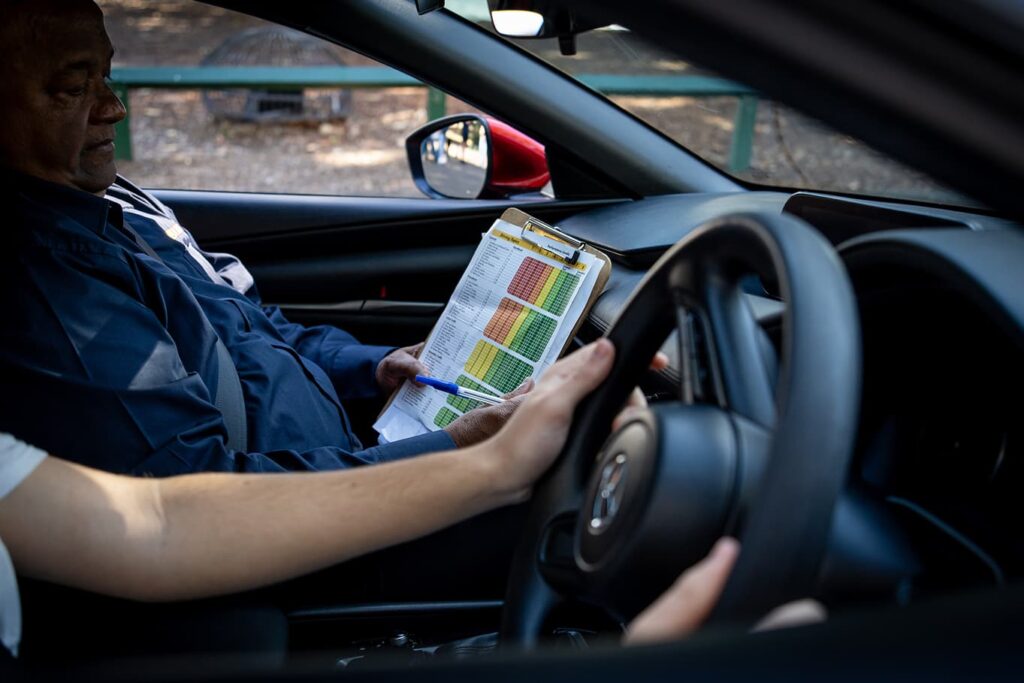
The best way to get comfortable with night driving is to spend more time doing it. An LTrent instructor can help you build experience at a pace that suits your current skills.