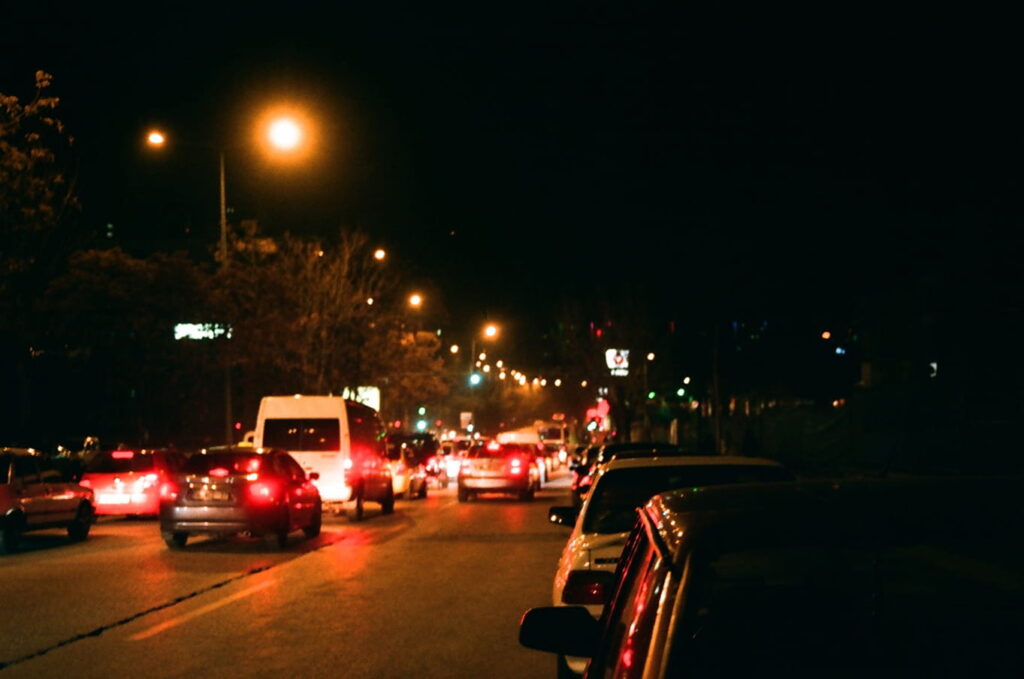
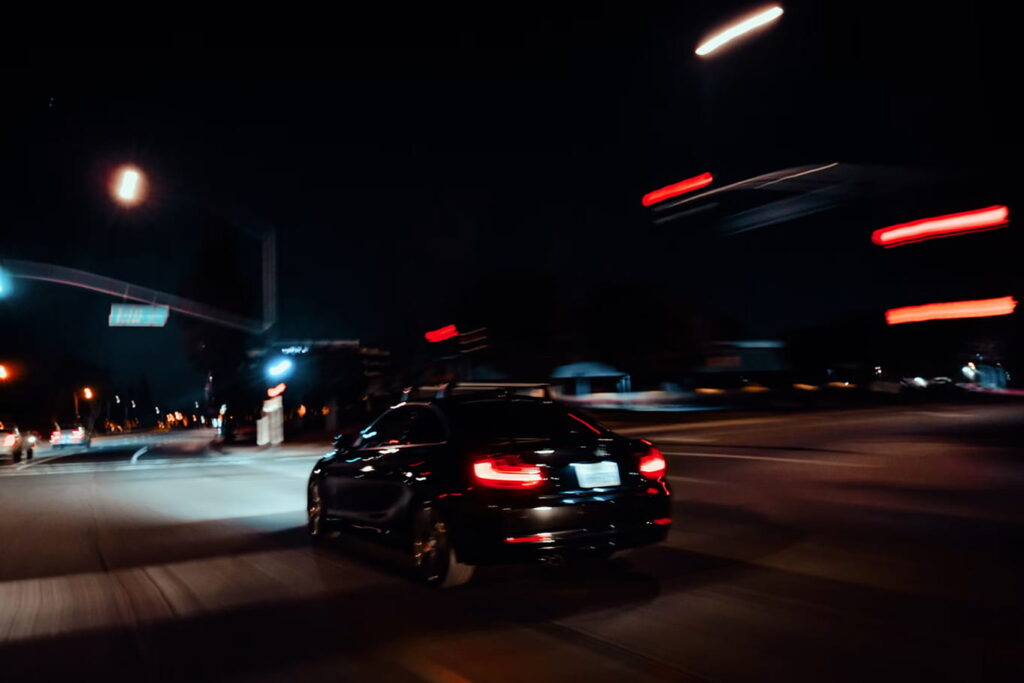
You spot a sign ahead, but by the time you get close enough to read it properly, you’re almost past it.
Maybe the road is unfamiliar. Maybe headlights from another vehicle are making it harder to see. Or perhaps the sign is there, but the darkness makes it much harder to pick out what it says.
This can be frustrating when you’re still learning to drive, particularly if you’re worried about missing a turn or ending up in the wrong lane.
The important thing is not to panic or make a last-second move. If you can’t read a sign clearly, give yourself time to work out what’s happening and make the safest decision you can.
Why can road signs be harder to read at night?
Road signs don’t necessarily become harder to read simply because it’s dark. It’s the amount of information around them that changes.
During the day, you can usually see the road, buildings, lane markings, signs and other vehicles more clearly. At night, some of those details can blend into the background.
A sign might also be competing for your attention with headlights, street lighting, traffic signals and other vehicles.
This can be particularly noticeable when you’re driving somewhere you don’t know well. You may already be trying to work out which lane you’re in and where the road goes next, while also looking for the next sign.
That can leave you with less time to take in what the sign is telling you.
Look for signs before you need them
One of the easiest ways to make signs harder to deal with is to wait until you’re almost beside them before looking.
When you’re driving somewhere unfamiliar, start looking further ahead. You may be able to spot a sign before you can read all of it, giving you a little more time to work out what information you’re being given.
This doesn’t mean staring at one sign as you approach it. Keep scanning the road and taking in what’s happening around you.
If you notice a sign in the distance, you can start thinking about what it might mean and whether it affects the route you’re taking.
The more time you give yourself, the less likely you are to feel like you need to make a decision immediately.
What if you can’t read the sign?
Sometimes you simply won’t be able to read a sign in time.
Maybe another vehicle is blocking part of it. Maybe glare makes it difficult to see. You could also be travelling on a road you’ve never driven before and simply not have enough time to work out what the sign means.
Don’t try to guess and then make a sudden move based on that guess.
If you’ve missed a turn, that’s okay. You can find another way to reach your destination. Making a sharp lane change or turn because you suddenly realise where you were supposed to go can create a much bigger problem.
Missing a turn is usually easier to deal with than making a rushed manoeuvre to avoid missing it.
This is one of the more useful habits to develop as a learner. You won’t always know exactly what is coming next, and you don’t need to.
Don’t let the sign make you rush
It can be tempting to speed up when you realise a turn is coming.
You might think you need to get into the correct lane straight away or turn before you pass the intersection. But trying to make up for lost time can leave you with less time to check what’s around you.
Instead, keep your attention on the road and drive at a speed that gives you enough time to respond to what you can see.
NSW Government guidance explains that warning signs alert drivers to possible dangers or changed road conditions ahead. These include intersections, curves, side roads, pedestrian areas and other hazards.
The sign is there to give you information. You don’t need to treat it like a deadline.
Use more than the sign itself
A road sign is only one part of the information available to you. Warning signs can alert drivers to things such as changes in road direction, intersections, merging lanes and other hazards ahead.
Road markings, lane arrows, traffic lights and the shape of the road can also help you understand where you’re going.
For example, if you’re approaching an unfamiliar intersection at night, you might see a sign indicating that a turn is coming. At the same time, you may notice lane markings showing which lane continues ahead and which one turns.
Looking at everything together can give you a clearer picture than relying on the sign alone.
The NSW Road User Handbook covers road lanes, lines and markings as well as warnings and road hazards, making it a useful reference for learner drivers getting familiar with how these different cues work together.
Give yourself more time on unfamiliar roads
Reading signs at night becomes more difficult when you’re also trying to work out where you are.
If you’re driving somewhere unfamiliar, it’s worth knowing your route before you leave. That doesn’t mean memorising every street or trying to predict exactly what will happen.
You just want a general idea of where you’re going.
Knowing that you need to turn at a particular point can make it easier to notice the relevant signs when you’re on the road.
It can also take some pressure off. Instead of trying to figure out your entire route while driving, you’re looking out for the next part of a journey you already have some idea about.
And if you do miss something, don’t let that throw you off. Keep driving safely and work out what to do next when you have the opportunity.
Watch what happens when glare gets in the way
Headlights can make signs particularly difficult to pick out.
An approaching vehicle may draw your attention away from the road ahead, while bright lights in your mirrors can make it harder to focus on what’s coming up.
NSW Government guidance advises drivers who are dazzled by high-beam glare to avoid looking directly at the headlights, look towards the left side of the road and slow down or stop out of the line of traffic if necessary until their vision recovers.
For a learner, this is another reason not to leave decisions until the last moment.
If you’re already dealing with glare and then suddenly realise you need to read a sign, you have a lot more to process at once.
What should you do if you miss your turn?
This is probably one of the most important things for a learner to get comfortable with.
You will miss a turn at some point.
You might not see the sign. You might be in the wrong lane. You might realise too late that the road you needed was just behind you.
It doesn’t mean you have to fix it immediately.
Keep going and look for a safe opportunity to change your route. If you’re using navigation, it can usually recalculate the journey.
What’s important is that you don’t make a sudden turn, stop unexpectedly or move across lanes without enough time to check that it’s safe.
Getting the route wrong is not the same as getting the driving wrong.
Learning to accept that difference can take some pressure off when you’re behind the wheel.
Practise reading signs without chasing them
When you’re learning, you can use a first driving lesson to start working on how you respond to signs rather than simply whether you can read them.
Your instructor might ask you where you think you’re going next, what signs you’ve noticed or which lane you expect to use.
That gives you a chance to practise looking further ahead and taking information in while still paying attention to the rest of the road.
You may also start noticing that some signs are much easier to recognise than others.
A large, well-lit sign may be obvious from a distance. A smaller sign on an unfamiliar road may take more effort to pick out.
That’s useful experience because you’re learning what requires more attention before you actually need to deal with it on your own.
Don’t rely on last-second decisions
When a sign catches you by surprise, your first reaction might be to try to correct the situation straight away.
That’s understandable, particularly when you’re still building confidence.
But good driving isn’t about getting every decision right the first time. It’s also about knowing how to respond when something doesn’t go according to plan.
If you realise you’re in the wrong lane, stay calm and continue safely.
If you miss a turn, keep going.
If you can’t read a sign, don’t guess what it says and make a sudden manoeuvre.
You can always find another route. You can’t always undo a rushed decision.
Night driving takes more than knowing the signs
Being able to recognise road signs is important, but night driving also requires you to manage everything else happening around you.
You need to keep scanning the road, watch your speed, look for other road users and pay attention to lane markings and traffic movements.
That can take some getting used to.
The more experience you gain, the easier it can become to work out where you should be looking and what information matters most.
And if you miss something, you can learn from it rather than treating it as a failure.
Build your night-driving experience gradually
You don’t need to wait until you’re completely comfortable driving at night before you start dealing with unfamiliar roads.
You can introduce different situations gradually during lessons, including roads with different levels of lighting, traffic and signage.
The NSW Road User Handbook recommends that learners start practising simple skills on quieter roads before progressing to busier roads and more challenging conditions. It also specifically advises learners starting to practise at night to drive on roads they know well.
That progression can help you build up your ability to read the road without trying to handle everything at once.
Eventually, a sign that’s difficult to pick out at night may feel less intimidating because you’ve had more experience dealing with the situation.
Know what to do when you don’t know what to do
Road signs at night won’t always be easy to read.
You may miss one. You may not understand it straight away. You may find yourself in the wrong lane or realise that the turn you needed has already passed.
That’s part of learning to drive.
What matters is knowing how to handle those moments without letting the pressure of getting somewhere make the decision for you.
Slow down when you need more time. Keep looking ahead. Use the information around you. And if you miss the turn, keep going.
The goal isn’t to spot every sign perfectly every time. It’s to become a driver who can stay calm and make sensible decisions when the road doesn’t go exactly as planned.
Know what to do when the route changes
If a sign catches you off guard, you don’t need to make a quick decision just to stay on course. LTrent lessons can help you practise navigating unfamiliar roads, reading signs and staying composed when things don’t go exactly as planned.