If you’re scared of driving, you may experience a racing heart when you’re just sitting in the car. Fear of getting into a motor vehicle accident, losing control of your vehicle, driving at night, or even harming others can negatively affect your driving experience. If you’re scared of driving, this significant fear can make it a lot harder for you to get your licence and enjoy everyday life.
So, how can anxious drivers take control of their mental health and conquer driving anxiety? Here are a few tips to help you overcome driving anxiety and feel more confident behind the wheel.
How You Can Conquer Driving Anxiety
1. Start Small In Car Parks & Low-Traffic Areas
First, if you’ve just started driving, you should mostly be driving in car parks for at least a few hours until you feel confident with basic driving manoeuvres like braking, accelerating, parking, avoiding obstacles, reversing, and so on.
Then, move onto rural roads or light traffic areas where there is little congestion. Lots of driving-related anxiety involves other drivers, so practising where there are few complications like bikes or foot traffic will help reduce anxiety. By progressing gradually, you give your nervous system a chance to adapt.
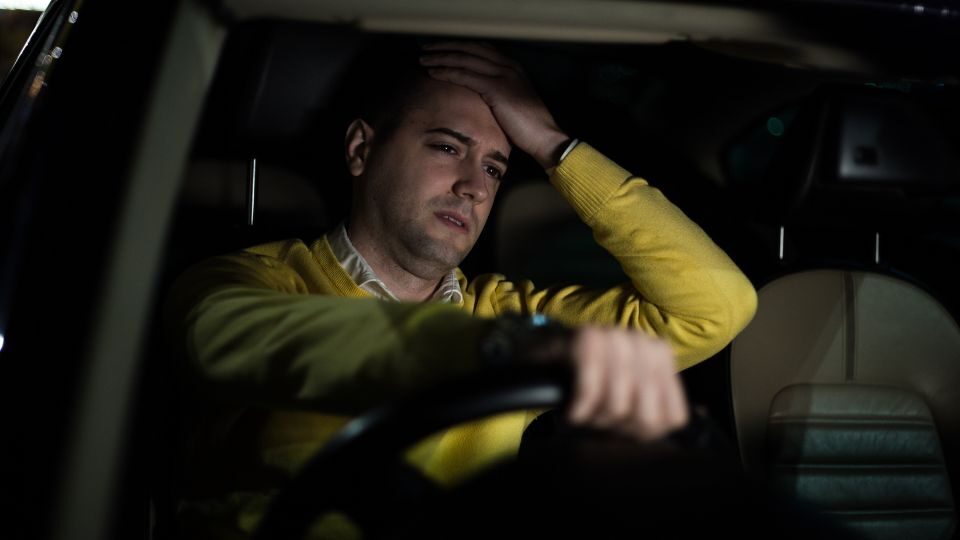
2. Stay Focused On The Road & Be Proactive
Eliminate all possible distractions. If you focus solely on driving, and do your best to keep your mind occupied with the routine steps you need to take to drive safely, you can avoid negative thoughts and anxiety. This approach also lowers the chance of physical reactions such as sweating or shaking.
Staying proactive by scanning ahead and watching other drivers helps prevent surprises, whether you’re in light traffic or heavy traffic. For more strategies, you might also read about the most common driver distractions.
3. Don’t Give Into “Catastrophic Assumptions”
Much anxiety about driving is based on “catastrophic assumptions.” If you get behind the wheel, you’re going to crash, get a ticket, or even hurt someone else, right?
Wrong. These assumptions are not based in reality. In reality, car accidents are relatively rare, and most of them are not serious. If you drive safely and obey traffic laws, the odds of being involved in a catastrophe are extremely slim. Recognising this can help reduce intense fear and allow you to practise with a clearer mindset.
4. Have A Plan If You Feel Like You’re Going To Panic
Having a panic attack behind the wheel is not something that you want to happen, but the mere idea of panicking while driving can actually cause a panic attack!
The best way to mitigate this is to have a plan. For example, tell yourself that if you’re driving in a suburban area and feel panicky, you’ll pull into a parking lot, switch on your hazard lights, and take deep breaths for a few minutes.
When you have a plan in place, you’ll find that you’re much less likely to panic while driving, because you’ll know that if you do, you can take steps to deal with the situation and get back on the road.
5. Avoid Unhealthy Behaviours Related To Driving
If you’re scared of driving, you may do things like Google accident fatality rates, revisit past negative experiences, or read articles about crashes to justify your fear of driving.
However, these behaviours do not help with your fear of driving and will only make it worse. Try to recognise, identify, and stop these kinds of unhealthy habits. Replacing them with practice in safe environments will make it easier to overcome driving anxiety over time.
6. Take Lessons From A Driving Instructor
Driving with a professional can be a helpful way to feel more confident behind the wheel. Driving instructors supply dual-control cars, meaning the instructor can control braking and acceleration, which gives you a “safety net” that can be very valuable when learning to drive.
Professional lessons also expose you to both light traffic and heavy traffic situations in a supportive environment. Over time, this steady exposure helps you judge distances more accurately and manage significant fear more effectively. You can also read how long can a person drive safely or improve safe driving skills as a new driver for extra tips.
7. Consider Cognitive-Behavioural Therapy (CBT) For Serious Driving Phobia
If you think you have a serious anxiety disorder and are very scared of driving, you should seek professional help from a mental health professional. They can help you understand your fear, suggest coping strategies, and explore therapies such as cognitive-behavioural therapy (CBT).
CBT is often recommended for panic disorder or specific phobias because it helps challenge catastrophic thoughts and gradually reduces significant fear. In some cases, medication may also be prescribed to calm the nervous system and reduce physical reactions.
If your fear of driving impacts your everyday life, don’t hesitate to seek professional support. You don’t need to face this challenge alone.
Get The Safety Tips & Instruction You Need From LTrent Driving School
The Safer Driver Course from LTrent Driving School is full of tips, techniques, and strategies that will help you feel safer on the road and overcome driving anxiety.
Our experienced team supports students who may have an intense fear of driving, helping them to practise gradually and manage anxiety effectively. You can also read social pressures every learner driver faces or what are defensive driving skills to build extra confidence.
Book your driving lessons now and get the help you need to cope with driving anxiety and drive safely across NSW, ACT, VIC and QLD.