Merging lanes on a multi-lane road can be stressful for new drivers. But in this guide from LTrent Driving School, we’ll cover the dos and don’ts of merging lanes safely. See how you can follow road rules, avoid sudden lane changes, and merge confidently while keeping yourself and others safe.
The Do’s of Merging Lanes
When merging lanes, DO:
- Speed up to match the same speed of traffic: You need to match the speed of vehicles in the lane you are moving to. This helps maintain traffic flow and avoids forcing other drivers to slow down suddenly.
- Check your blind spots: Always use your mirrors and do head checks to spot cars in your blind spots when merging. Not recognising blind spots in driving is one of the most common causes of merging accidents.
- Yield to merging traffic: If you’re already on a road and another vehicle is trying to merge from an on-ramp or adjacent lane, allow them in safely when possible. This is part of courteous and safe driving practice.
- Cross only one lane at a time: Avoid sudden lane movements. Merge into one lane at a time when it’s safe to do so, then continue moving toward your desired lane gradually.
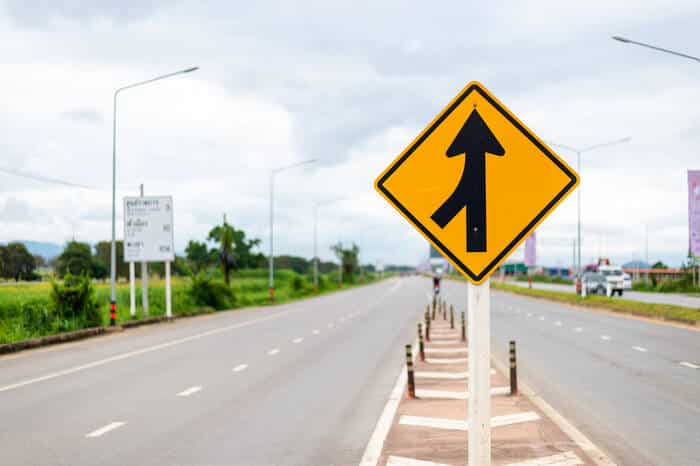
Since most merging challenges happen at higher speeds, it’s worth brushing up on key highway driving safety tips to stay confident on multi-lane roads.
The Don’ts of Merging Lanes
When merging lanes, DON’T:
- Slow down before you join traffic: Travelling below the speed limit or slower than traffic already on the road can create confusion and risk. Drivers who merge too slowly often cause others to bunch up behind them, leading to dangerous tailgating. Keep a steady speed to merge safely.
- Slow down before entering your desired lane: If you’re exiting, only reduce your speed after you’ve entered the turning lane. Slowing down too early in general lanes can confuse other drivers and cause sudden reactions.
- Focus too much on the lane line: While it’s important to stay in your lane, fixating on the lines can distract you from the traffic environment. Many crashes occur at intersections for similar reasons — divided attention and reduced awareness.
- Make a sudden lane change without warning: One of the key road rules is to indicate early and clearly. Sudden lane moves without warning not only breach road etiquette but also increase your risk of sideswipes.
- Show impolite lane etiquette: Cutting others off, not letting vehicles in, or refusing to make space when you can do so safely is a sign of poor road manners. Courteous merging helps everyone stay safer.
Need Help Improving Your Merging Skills?
Poor merging habits can cause unnecessary tension and make driving more stressful. If you’re having trouble judging gaps, keeping the same speed, or avoiding sudden lane changes, our instructors at LTrent Driving School can help you improve your technique.
Trucks pose additional challenges during merges due to their size and blind spots. Be sure to review our guide on what not to do alongside a truck when passing for extra safety around heavy vehicles.
We also offer the NSW Safer Drivers Course, which provides additional training and 20 bonus logbook hours for learner drivers.